Insomiac’s Spiderman came out recently, (September 7th, 2018), and though the act of buying the game was a little bumpy thanks to some bad work on the part of GameStop, I still managed to get a copy of the game on September 8th. since that time, I have 100 percented the game, and I don’t regret my actions.
At this point saying that Spider-Man was a good game might be understating the point, but more than that, it’s a tad redundant. The people working on the game have a long history of quality when it comes to game development. As for Spider-Man’s history with games, well, that is a bit less quality. There have been so many in the past, and I firmly believe that this one stands above them.
The story of the game is a rather short one, focusing on Spider-Man as he tries to juggle his life, relationships, and jobs, while maintaining a secret identity, or rather not so secret, as by the end of the game, it is revealed that everyone around him just knows that he is Peter Parker. In a twist though, Spider-Man isn’t the only playable character in the game. During certain segments of the game you take control of two other characters, and use them to do stealth sections. I can’t say I am a fan of stealth though, whenever it came up as a part of the game a loud sigh escaped my mouth. However I do recognize that even though Spider-Man is usually quippy, and talks a lot, sometimes there is a need for him to take a quieter approach. These stealth sections are handled about as well as a stealth section could be so I can’t really complain too much, after all, it isn’t the game’s fault that I suck at being sneaky.
The city of New York is alive in this game, complete with separate districts and plenty of things to do. The map is quite large, and could put a lot of other open-world games to shame, even by being confined to just one area. As you might expect, traversal of this area is done by web-swinging, well that and general parkour over the roofs of buildings. The swinging is fast, and never feels sluggish, allowing the player to get from one side of the map to the other in only a few minutes.
The combat borrows a lot from the Arkham style games, which honestly is the only way to do combat as Spider-Man right in my opinion. actions are fast-paced and fluid, however, it can take some getting used to, as the separate buttons on the controller all have their own parts to play in some ways, and it can feel overwhelming at first.
Speaking of overwhelming, there are a lot of icons to look at in this game. I never counted, but it can be a little hard to look at. There are backpacks to find, research to do, pictures to take, four different factions of crime to stop, challenges to complete, bases to deal with, and other various things hidden around the city. For the completionists out there, much of your time spent playing this game is gonna be cleaning up all of these side things. Doing these things helps you earn tokens that you can use to unlock new suits or gadgets, or upgrades to those gadgets. The Crimes can feel like a slog though, and were probably my least favorite part of the game.
That’s all there really is to say honestly. The game is still new, so I don’t want to post spoilers. The take away here is that Spider-Man isn’t just a good game, but a good Spider-Man game, and its highly likely that we will see more of it in the future.
For those interested Spider-Man can be found exclusively on PlayStation 4
Akiba’s beat takes place in Akihabara which is like the nerdy/otaku district. We meet our main protagonist, his name is Asahi Tachibana and he’s a NEET which is slang for someone who doesn’t have a job and just stays home and plays video games or reads comics and manga, stuff like that. Basically they stay home and do whatever they want, goals am I right? Soon after we meet him we meet Saki Hoshino and his world, as well as ours is completely turned around.
Basically, we have a Ferris Bueller type of situation in the sense that Sunday keeps repeating over and over. The reason why the day keeps repeating is because of delusionscapes. Delusionscapes are dungeons essentially, dungeons that are formed because of people who are so obsessed with a delusion of theirs. You meet a lot of other side characters that are playable as well, and each of them have their own wacky personalities. Watching the dialogue between some of these characters makes for a really great time.
Akiba’s beat plays as an action JRPG and the battle system and the mechanics are really not hard to follow or learn at all. In order to engage in battle you just have to run into an enemy (running into them from behind gives you an advantage, we’ve seen that before) or you can just try to sneak past if you don’t feel like engaging. You can switch between playable characters and being that this game is called Akiba’s Beat, it is music based a little bit. A characters special move is associated with the type of song that you equip to them and you can actually hear a snippet of the song when you activate said move. The game also has quests you can do in order to get that special true ending and you can take part in the ‘trading card’ part of the game where you can collect cards that literally look like a trading card game you can go purchase at the store. Overall it’s a nice, quirky, JRPG. Each character has vastly different personalities so you’re bound to have a character that you just love.
Being that the game isn’t really a big budget RPG it looks lower quality than most known RPGs, for instance, the NPCs are literally just shadows or silhouette of characters and they use blue for boys and pink for girls, but the game is still worth it.
Akiba’s Beat is available for the PS4 and the PS Vita.
This post is coming hot off the heels of my playthrough of Shining Resonance Refrain, so strap in, things are about to get weird.
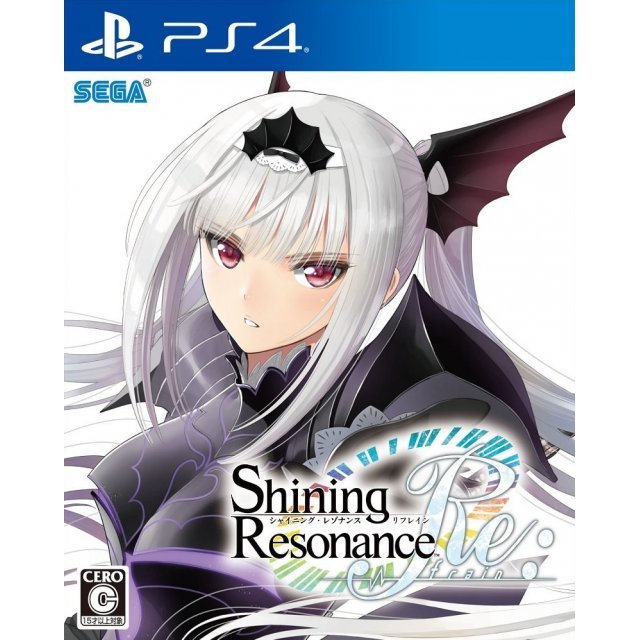
Shining Resonance Refrain might be the worst game I have ever had the misfortune of playing. Hyperbole aside, Shining Resonance is a very bad game. If I had to compare it to something, it would be that one really old roller coaster at a theme park. I’m sure you know the one, it has like one hill, and is made of wood so it’s extremely bumpy, and at the end of it you wonder why the park would leave such a disaster standing, and you’ve been jostled around so much your back hurts (true story.)
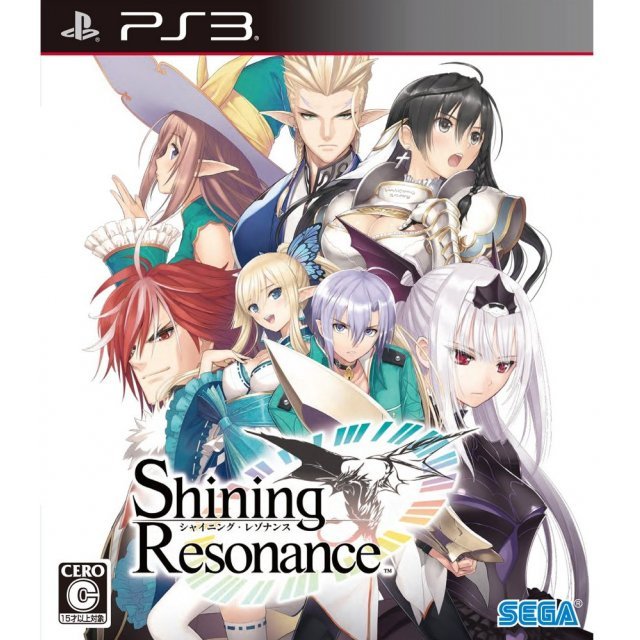
A little bit of perspective, Shining Resonance is a game that first came out in Japan on the PS3 in late 2014. Though I cannot say how well it was received, it did well enough to warrant a western release in mid-2018 across all current platforms. Shining Resonance Refrain, as it was now known in the west, was the first game in the Shining franchise to hit western shelves in 11 years. To its credit it came with all the DLC that was present in the PS3 release, so it became sort of a “definitive edition” as it were. The DLC as near as I can tell really only adds different costumes that each character could change into, good thing too because the normal outfits can be mind-boggling at times.
As the game opens up the player takes the role of Sonia Blanche, the crown princess of a kingdom known as Astoria. She is in an enemy fortress looking for a captive there named Yuma. How she found out he was there, or why she only rescued him, and none of the other prisoners, and there are more, I could not tell you, the game doesn’t go out of its way to explain much, and that is a common them here, so I hope you like it.
Combat in Shining Resonance is handled like a Tales of game, in that it is an encounter based system, with real-time action. Unlike a Tales of game however combat is slow, and many of the characters involved carry heavy weapons, or need casting times to do magic.
The main story of the game centers around Yuma as he learns to tame a power within him, the soul of the Shining Dragon, who is never given a proper name, so the game just says Shining Dragon a lot, and dragon in general. There’s also some plot about stopping a religious organization from reviving a sealed deity named Deus, but honestly it’s the Yuma party all day, all night, and my what a pathetic party it is. Yuma as a character is a whiney type, with no confidence in himself. Eventually he works through that, but that revelation doesn’t come until late game, so whining is what you’re in for. The cast of main characters surrounding him are there…. yup. They all have their own personalities for sure, but most of that stuff is fleshed out in side content that I couldn’t be bothered doing because the story had failed to draw me in. Even late in the game as the story was reaching its climax I could only really muster a “look another dragon” as I was so ready for this slog to end.
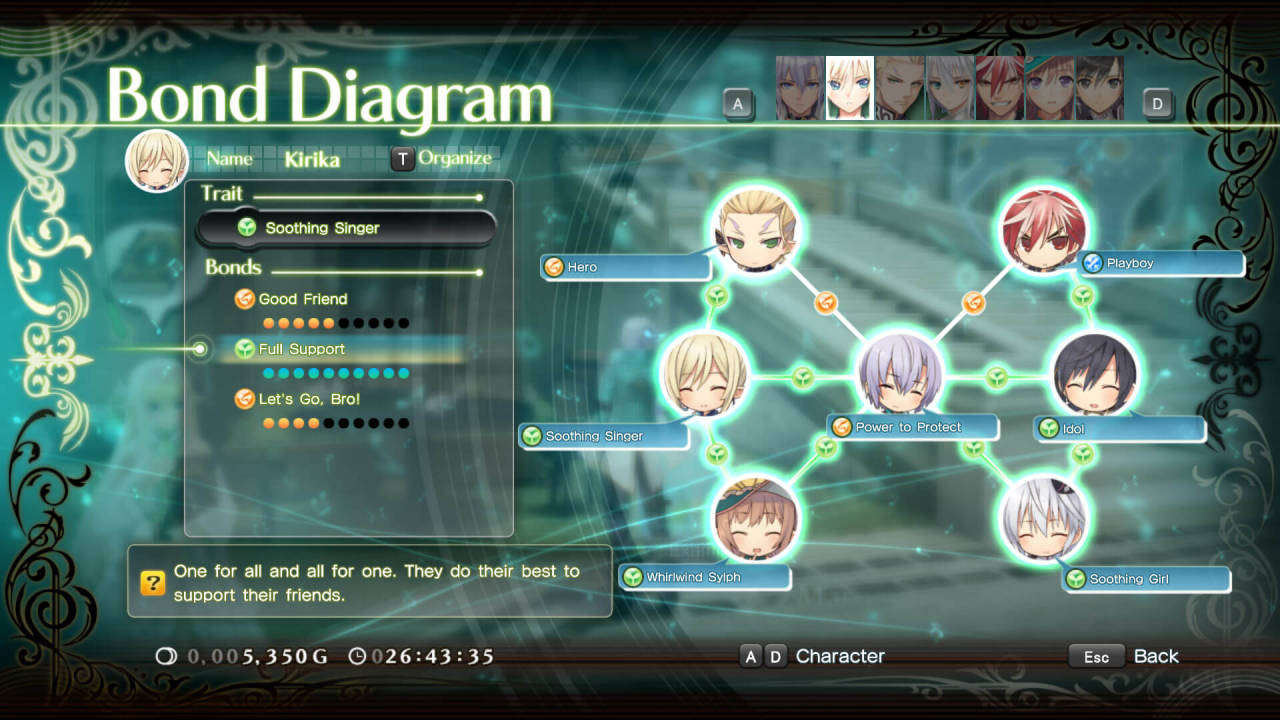
Mechanically however, is where the game really trips over itself. there exists a system in the game called the “Bond Diagram” here you can select different traits for each character, which will have an effect on their relationships with other characters, which will in turn have an effect on how they interact with each other in battles. If any of that sounded confusing, it is, but just in case here is a diagram.
The main problem here is that the game never does a good job explaining what these traits do, or how they effect character interactions. The in-battle effects are done through the resonance system, depending on their relationship, characters can heal or buff allies, debuff enemies, and in some cases allies. most of this is never explained, so I never bothered messing with it.
Another system they have in place was the B.A.N.D system, which was a group buff depending on the song being used, and the character at the center, again, I didn’t understand this system much, so I didn’t really bother with it.
Finally, in battle, Yuma can actually call on the Shining Dragon to lend him it power. This turns Yuma into the dragon, which comes at a significant boost in power, but with the risk of Yuma losing control of it. Eventually this is no longer the case, but that is not until the halfway mark of the game. As for what determines this berserk state, I don’t know. I had some instances where I completely drained the on screen meter and didn’t have it happen, only to have it happen at a nearly full meter another time. Nothing about how this system worked made sense, so when it was finally gone I was glad to see it go.
another thing I found after the halfway point was a lock-on button for battles that I had no idea was there. It’s entirely possible I glossed over this detail, but it doesn’t matter much, because in the end I never used it. With large monsters it was almost a hinderance, as the lock-on camera felt like its place was down in the grass, rather than level with anything on screen.
Another issue with the game is that the auto-targeting would rather focus on some enemy off in the distance rather than the one right in front of you, sending whichever character you happen to be controlling into a flailing oblivion, as the enemy you wanted to fight takes pot-shots at you from behind.
The game struggles under its own wait as well. I played this on a PS4 Pro, supposedly one of the most powerful consoles on the market, and this game which was released on the PS3 was having trouble. during any point where there was just a little too much going on on-screen, the action slowed to a crawl until the effect happened.
This game is also loud, I kept my TV on low volume for most of this playthrough because I honestly felt like I was gonna blow out my speakers at one point.
Perhaps the biggest offense here is that reserve party member gain no EXP from fighting. Normally this would be no big deal, as many games allow players to pick a party that works best for them and go. Shining Resonance however blindsides the player with a story related battle where only two members of the party take part. In my case it was two members that I very rarely used. What followed was my attempt to quit the game, before having to sit through hours of extra level grinding in order to bring these two members up to snuff. Even when I felt that I was comfortable with them to finish the battle, it still was not pleasant.
These random spikes in difficulty are present throughout the whole of the game in fact. Sometimes random enemies would wipe my entire party out from full health before I even realized what happened, other times I managed to finish off enemies that were nearly forty levels ahead of me with relative ease. Boss fights would often follow other boss fights with no reprieve in between, and in at least one case there was a third boss fight, and you enter these in whatever state your party was in when you finished the previous fight. Should you lose your options were try again, or load a previous save and fight the first fights all over again.
At no point during my playthrough did I feel like I was having fun with Shining Resonance. It is complete garbage at worst, and mediocre at best, and I don’ t know that I would ever try another game in the Shining franchise because of it.
If for whatever reason none of this deters you, You can find Shining Resonance Refrain on Nintendo Switch, PS4, Xbox One, and Steam
Ys Origin, in terms of the Ys timeline starts about 700 years before Ys I. It follows the story of Yunica Tovah, Hugo Fact and our mystery third main character (you have to beat the game with the first two before you can unlock the third one and actually get the real events of the story. this is a no spoilers post sort of).
The main object of the game is to protect the goddesses of Ys, Feena and Reah, from an evil dude, Dalles. Basically, he wants the ‘black pearl’ something that the goddesses created for humanity to be able to use magic, he wants that. The story’s objective becomes different in the third and TRUE story, but like I said, I’m not about to spoil that!
Another fast paced action RPG with a stellar soundtrack, exactly what I expect from an Ys game. When you start the game you can choose between playing as Yunica or Hugo.
Yunica’s character wields an axe of sorts, or at least it looks like one, and she wields it fast. She’s more of a close range type of character meaning you really have to get up into the enemy’s face in order to attack, later on in the game she gets a sword that allows her to use a fire ability, it’s much slower than her other weapons but it makes up for speed with power, that thing can deal some damage. Yunica is also able to wield air and thunder magic. She’s an upbeat type of girl who is dedicated to protecting the goddesses of Ys just like her father did. A real lovable character and her drive to succeed with in turn drive you when you are playing as her.
Hugo’s character wields the, ‘eyes of fact’. He is mainly magic based so in other words he plays as a far range character. He has no physical attacks and he uses fire, thunder, and wind as well, though his magic attacks look much different than Yunica’s which is great because it really makes you feel like you are playing as a different character rather than just another copy. Hugo also has a different personality than Yunica as well being manly calm and more of an analytical type of character.
Ys Origin is a challenging game. It demands that you spend time in each stage, leveling up so that you can beat the mid bosses and final bosses of each stage. At the same time, the game’s soundtrack is just so good that you will definitely not mind spending the time to grind. The sort of chibi style art style of the game is also not bad to look at either, it looks as well as it plays, great! The game is also very short, I finished it in under 6 hours each play through. If you’re interested in a good action, story driven game with an amazing soundtrack then I would definitely pick this up.
Ys Origin is available for the XBOX One, Steam, PS4 and the PS Vita.
The Ys series is one that goes largely unnoticed by the greater JRPG community, even here on Tumblr, there are so few tags for it that it becomes nearly impossible to find content for it. Despite its lack of mainstream, or even obscure-stream popularity, the Ys series has endured for 31 years as of the time of this post, having just celebrated its 30th anniversary in 2017. I would love to write a post about the company behind the series Nihon Falcom, as a whole, but honestly, this is likely to be long-winded as it is. I am a newcomer to the series, but I fell so hard for it that I worked my way through all but one of the main series titles recently. I can’t call this a retrospective or really even a review, as I have not played some of the oldest titles in the series. Ys I is older than I am, and games from the 80′s are kind of hard to work back into. All the same, I have played modern remakes of most of the old games, the exceptions being Ys V, and Ys VI. I would like to use this as a time to give newcomers a very barebones overview of the series, I will try my best to avoid spoilers if I can help it, but HERE IS A WARNING just in case
The Ys series is vast, and spans almost any major console you can think of. Sega Master System, Genesis, NES, SNES, PS1, PS2, PS4, PSP, PS Vita, Nintendo DS, PC, are all places you can find Ys games, or some type of remaster of an older game. Though the series as flown under the radar for much of its life, there is a small but dedicated fanbase for it. Some have been with the series since its kind of ugly beginnings, others have joined the ride recently.
The Ys series follows the adventures of Adol Christin, this guy:
The face of a champion I swear it.
Across the series Adol’s adventures take him to different parts of a world based pretty loosely on our own, but in a “definitely not” sort of way. Some places of note are the Romun Empire, Afroca, and Ispani. I wish I was making those names up, but what can you do?
The first Ys games were simple, and not particularly long. Though that is par for the course with old 8-bit games, the length isn’t what will get you, but the difficulty. My trip through Ys I (on the psp) was less than 5 hours, give or take. the first two games in the series, I refer to as the bumper car games, because Adol doesn’t have a dedicated attack button, but rather he has to run at an enemy off to the side to do damage. Running at an enemy head on will result in him taking damage as well, and the enemies hit surprisingly hard. All the same though, Ys I isn’t terribly hard, and getting back and forth from area to area is quick enough because the overworld is not terribly big. Also the music of the Ys series is some of the best video game music around, it’d be hard for me to talk about the soundtracks of each individual game, but they are all so good.
Ys II brings the bumper cars as well, but it also mixes up combat with a basic magic system, though in truth, the only offensive magic Adol gets is a fireball. The rest are a light magic, that reveals hidden objects. A transformation magic, that turns Adol into a monster so that he may roam freely amongst, and even converse with enemies in the field. A return magic, that acts as the series first fast travel mechanic. Time magic, that can freeze time and enemies, and a shield magic. There are various other items at Adol’s disposal, but the magic in the game is his most useful tool. For boss fights, the magic system takes a frontal position, as most bosses are immune to Adol’s sword swings. Ys II is certainly larger, and longer than Ys I, it is also a good deal more difficult, as if you aren’t a good shot, bosses can destroy your health much faster than you can theirs. there is also the added difficulty of not being able to use items in battle. In fact, the game locks those options out during boss fights. I died more times than I care to remember.
Ys III said goodbye to the bumper car mechanics, and instead opted for a more Zelda II style. but I won’t talk about Ys III because it’s uh…
well it’s that.
Instead, Oath in Felchana, the PSP remake of Ys III brought up to a more modern gameplay style, and standard, well modern at least for when it came out. More on that later. Felghana adapted a more fast paced gameplay, revolving around a 3 element magic system, and fast swordplay. this gameplay style was first used in Ys VI, but I can’t comment on that because I haven’t played the game. Felchana is difficult, but also short. given that its source game is from the early 90′s this isn’t a surprise. it’s map is pretty self contained, as it takes place on an island, and all of the dungeons in the game are in a small area save for the final dungeon. given the nature of the game, there is also a fair bit more platforming going on. Adol now has access to some more common JRPG tropes, like a double jump, or running shoes. His magic this time is limited to a spinning wind attack, which he can use to help him cross longer gaps, a basic fire ball, and an earth dash, that allows him to break through tough objects like the shells of his enemies. Again I died more times than I care to count.
Also released around the same time was Ys Origin. originally it was only on steam but eventually made its way to the PS4 and Vita. As the name might imply Ys Origin is a prequel game that takes place 700 years beforethe events of Ys I and II. Adol isn’t at the helm this time, rather the game allows you to choose one of two characters, Yunica Tova, or Hugo Fact, and follow their stories as they traverse the Dark Tower. The combat system works much like it does in Felghana, both characters have access to 3 elemental skills. Yunica gets a spinning wind attack resembling Adol’s with largely the same applications. A thunder attack, and a fire attack, that is problably one of the most useful skills in the game. Yunica also wields an axe, making her a close range fighter, her movements are swift. When using her fire skill however, she gets a long sword, which makes her slower but she can hit harder. Hugo on the other hand is a more long range type. His basic attack is a shot from his magic staff and two contraptions that follow him called the “Eyes of Fact”. His distance changes the game tremendously, on more than one occasion did I feel more like I was playing a Shmup, than an RPG. Hugo also has access to a wind shield, thunder mines, and fire lasers. Combat in Ys Origin is some of the most satisfying in the series, it’s fast, and also comes with some nice feedback when you hit, and kill enemies. The bosses are recycled from Ys I and II however they are nothing like they used to be in those games just an example:
This guy from Ys II
became this blurry boi in Ys Origin. I’m ashamed to say I finished this game on 6 separate occasions, but it too is not a long game, even on hard mode, my playthroughs never broke more than 6 hours.
Ys seven came, and the series decided to ditch the Roman/Romun? numerals. Guess Ys VII would have looked weird?. The series evolved again from the gameplay debuted in Ys VI to a more traditional party style system. Now not only were you still Adol, but you could also play as Adol’s long time friend Dogi, and other characters introduced to you in the game. The combat system here works different too. now attacks come in three flavors. Slash, which Adol defaults to due to his sword, Strike, which is reserved for bulkier slower characters, my least favorite, and pierce, generally reserved for long range types, like bow and arrow users, but can also mean spears. The scope of Ys Seven is larger than it ever had been before. previously games had a level cap of around 60 (Ys II’s was 55). with seven the cap was raised to 99, and it shows. bosses are generally harder, the game itself falls into a more modern Zelda format, go 3 places find the thing, go back to those same places, find another thing in the second half. Seven was also the only time in the series where I felt the need to level grind, the final boss was a nightmare. it’s also worth noted that of all the games I have played, Ys Seven was probably the ugliest. I’m not sure what happened, but the ser4ies prior had used a more chibi art style, and seven tried full models, and everything kind of looks blurry and gross because of it. still good though.
Memories of Celceta is a tricky one. Largely it’s the same type of game as Ys Seven. The complications come from where it fits in the series. Celceta is largely considered the canon version of Ys IV. back when Ys IV actually came out, it came as two separate games, developed by two separate companies as Ys IV Mask of the Sun, and Ys IV Dawn of Ys. Neither one of which were developed by Falcom, and have both since been stricken from the canon (as has Ys V but that is neither here nor there). Celceta was released on the Vita in 2014 but has since been released on Steam as recently as this year (2018). There isn’t really anything new here to tell honestly, it’s a much better looking Ys Seven in concept. however, the game is much shorter, or at least it feels shorter.
Finally Ys VIII Lacrimosa of Dana. We’re back to Roman Numerals for some reason. Ys VIII is the most recent entry in the series, and it shows. While it shares its combat system with Seven and Celceta, it vastly improves on what an Ys game can be. Gone are the isometric camera angles and chibi artstyles of previous games, we’ve gone full 3rd person gaming. the world of Ys VIII is also much larger than even Seven’s. Like Felghana, Ys VIII takes place on an Island, though this one is much bigger than Felghana. The map of Ys VIII is vibrant, and full of life. there’s way more to do than there ever was before too. the main story is one thing, but now there were also raids, and hunts, fortifying your little island village, finding survivors of a shipwreck that landed Adol on the island in the first place. There’s also a large list of side quests, which have been in other games previously, but the Ys series does a bad job at telling the player about them, so I will too. Quests here are given via a quest board, which is in one place and easy to access. Technically, this is something that started in Celceta, however, those boards were specific to the towns that you went to. For the first time in the series, Adol has to share the title of main character as well. The titular Dana is now in top billing alongside him, and she has her own story to tell that runs parallel to his. there is also a lively cast of secondary characters. Ys VIII saw a release in 2017 on the PS4 and Vita, and in 2018 a version was released on the Switch. it is by far the most accessible title in the series, if only because it’s likely the easiest to find.
The voice acting across the series has been spotty, some games don’t have it at all, and others use it sparingly. but the quality has usually been good.
There is also an anime based on the first two games, it’s good if you wanna be confused, and have a general lack of anything to do.
As I wrap this up, I just want to say that I hope I have done a good job going over this series, as it is so good, and deserves far more attention than it gets. The same could be said for Falcom as a whole, but again, this has been pretty long winded already.
have some more pictures of Adol’s derpy close-ups
I might try to do more of these in the future, this was pretty fun
Let’s talk about the Ys series, specifically Ys VIII, Lacrimosa of Dana.
On a whim, and after watching a game review on Youtube from Beatemups, I went across town and bought Ys VIII, Lacrimosa of Dana. It was probably the best decision I have ever made in my entire life.
The game opens up with Adol, our fiery-haired protagonist and his lifelong friend Dogi washing up on a mysterious and uncharted island called Seiren. The main objective of the game is to find other castaways, protect your village, and to eventually get off of the island. Through your play though you will find that it is extremely easy to fall in love with not just the main group of people but all of the side characters, each of them having their own style and personality. As you get deeper into the game, you learn about the island’s mysterious past through another main playable character, Dana.
Essentially, you’re playing two different games as one and the game so effortlessly ties in a bigger, deeper story all at the same time. It’s not confusing or convoluted, it’s actually the opposite, it’s SO easy to get sucked into whatever it is you’re doing.
Speaking of getting sucked in, let’s talk about raids, quests, and building up and fortifying your village. Normally whenever I play JRPGs of any kind, quests and menial tasks are my least favorite part. They’re always so boring and I feel like they have nothing to do with the story sometimes. Ys VIII is different. I felt myself wanting to do quests because in doing so I got to learn more about the castaways, I got to gift them presents that specifically catered to their personality and like I mentioned before, each and every one of them is a treat to engage with. The raids can get a little tough a hard to keep up with at times but that only made me want to grind more so that I could eventually work towards the game’s true ending.
Ys plays as an action RPG but at the same time it plays different than any action RPG I have played before. It is extremely fast paced and so smoooooooth! I tend to stay away from turn based RPGs mainly because the slow battle systems bore me and Ys VIII is definitely not that! Because the game is so fast paced it keeps you on your toes all the time, and let me tell you, the music matches whatever it is you’re doing. The entire album for this game is JUST SO GOOD. Every single song is amazing (you can listen to it on Apple Music).
After buying this game on a whim, I can confidently say that it is probably the best RPG I have played to date. I fell in love with this series and I fell hard (I went out and bought literally almost all of the games in the series). Please do yourself a favor and check out this game if you’re looking for something to do. The Ys series has been going on since the 80s, it’s older than I am. There’s a reason why it’s been going on for so long. The story in Ys VIII was engaging, the dialogue between the characters are lovable and funny, the music is to die for, it looks damn good, I genuinely felt sad when I finished it. I did not want to leave, instead I wanted to keep adventuring with Adol and his friends. I cannot wait for the next installment.
Ys VIII is available on the PS4, Nintendo Switch, and the PS Vita.
Ah Xanadu, another of Nihon Falcom’s longest running series. Spanning from 1985 to 2015 as of the time of this post, Xanadu has seen many iterations to it’s series, and if I was being honest, most of them are ugly. Tokyo Xanadu is the latest game in the Xanadu franchise. Released in Japan in 2015, and in the west in 2017 on the PS Vita, Tokyo Xanadu looked to breathe life into a semi stagnant franchise, and bring it into a modern era. Also released later in 2017 in the west was Tokyo Xanadu Ex+ on the PS4. Though the core of the game was mostly unchanged Ex added extra content to the game that I will detail to the best of my ability when it is relevant.
The first thing to talk about when it comes to this game is it’s story. At a glance, it may seem as though Tokyo Xanadu is making a play for the Persona style of game, and this assumption may be right. I won’t dive too far into story bits, but I feel it has to be mentioned that from the get go it seems like Tokyo Xanadu is doing it’s best “Supernatural School Anime” impression. First there is a school, then a mysterious transfer girl with ties to some underground organization, supernatural phenomena that most people aren’t aware of, and a protagonist with a painful past that leads him to a power he otherwise shouldn’t have. All of these element come together is a solid attempt at a playable anime. There’s also the added touch that at the beginning of each story chapter, the opening video plays, almost like you’re starting a new episode. The game even provides its own filler chapter in the form of an intermission in between two chapters later in the game. Overall this setup is nothing new, but it’s charming nonetheless, especially if you become invested in the individual characters that come through in the story.
Speaking of characters, Tokyo Xanadu follows the life of Kou Tokisaka, a high school anime kid, who has a tiny group of friends, and a decade old tragedy that he has yet to completely work through. Kou is honestly just sort of there most of the time. It’s likely he’s meant to be a proxy for the player, as is the case for many protagonists, but nonetheless he’s reliable, and quick to throw himself in harm’s way for the sake of complete stranger. It is one such act that leads him to an encounter with Asuka Hiiragi, the mysterious transfer girl, and anime love interest (even if the game never says it). This encounter leads Kou into his first eclipse, which is our main source of dungeon crawling for the games. Eclipses are dimensional distortions brought about by unusually strong feelings of people around them. A powerful monster, a “greed” as the game calls it, uses these feelings to tear a rift into another dimension. Basically the story follows Kou as he gathers people around him to take on the looming threat of the greeds and eclipses, and whatever other paranormal threat might come their way. The Ex+ version adds onto the story with extra chapters, that usually center around two of the main party members, and deals with their dynamics with each other. These extra segment also contain dungeons so you may find yourself forced to use a character, or more, that you may otherwise not use. In addition to the original game’s epilogue chapter, the Ex version also adds an after story chapter.
As far as presentation is concerned, Tokyo Xanadu owes much to its sister series “The Legend of Heroes” specifically Trails of Cold Steel. much of how the game looks and runs is borrowed from Cold Steel, the font, text bubbles, the upgrade system, and much of the side content. Tokyo Xanadu even lifts an entire character from Cold Steel and inserts them into its universe.
Moving from presentation to gameplay, we see that Tokyo Xanadu is very much a different game than Trail of Cold Steel. For starters Tokyo Xanadu is an Action RPG, where Cold Steel is turn based. What sets it apart from other action games though is it’s emphasis on dungeon crawling instead of doing things in the overworld. For the most part all combat is done inside of an eclipse. there are a lot of things to unpack where combat is concerned, so I’ll do my best to hit them all. For starters, each member of the main party has a unique weapon, which the game calls a soul device. These weapons allow for each character to have their own playstyle, and feel separate from other characters. to add to this each character begins with a set elemental attribute. These elements are Flame, Wind, Spirit, Shadow, and Steel. These elements act in sort of a wheel in terms of effectiveness.
The Ex version adds a sixth element in the form of Light, however, it works differently than the diagram above. Light is strong against all elements, but is weak against Shadow. In addition to having a main elemental power, each character will be able to access a secondary element as the story progresses, which can help vary up the team composition as needed. Furthermore each character has a certain number of slots that they can apply lesser elements to. These lesser elements add helpful buffs like attack strength, or extra defense, they can also add effects like poison or freeze. As far as combat is concerned, each character has access to a number of abilities, A basic attack, a projectile attack, a power attack done by holding the projectile button, and an X-Attack, which is a special attack that comes with a fancy animation. The Ex version also adds an Ex attack, which is a less special special attack, that comes with its own meter. Learning how each of these skills worked as well as their effectiveness can help to adjust the party to one’s liking.
Party’s are generally 3 person teams made at the beginning of the dungeon. At the start of each dungeon is a screen that looks something like this
This screen gives some helpful information, mainly though it shows you exactly what type of monsters to expect in the dungeon, and their weaknesses, as well as a number, so you can plan accordingly. Generally there are two characters that can be switched between, and a third character in a support slot. This slot isn’t locked away or anything, but as long as a character is there they can heal themselves gradually. whenever a character dies, they get moved to this slot, where they begin a pretty lengthy revive process.
The actual act of dungeon crawling present is rather tame. the enemies in the game are pretty lax, and early on they don’t present much of a challenge. during the late game however, dungeons get longer, and the hazards get worse. Enemies have more health, there are now stage hazards to worry about, and some pretty tough mid-bosses.
At the end of each dungeon, you get grades on you’re performance. A few factors go into this grade, time took, enemies killed, treasures found, and damage taken.Even on normal mode it can be surprisingly easy to earn an S rank on a dungeon.
The Bosses in Tokyo Xanadu are where the difficult parts begin. These are large enemies, with plenty of ways to attack, and a lot of health. beating them in a clean way means getting good at the dodging and attacking system that Tokyo Xanadu has in place. Some later bosses can be tough, if only because it can take some time to figure out exactly what is happening on screen.
Outside of dungeon crawling and the main story, there are plenty of things to keep Kou occupied during his daily life. There are friendship episodes, which offer a chance to have one on one time with various characters in the main party, or some secondary ones. there are quests to be completed, each with their own rewards. There are books to be read, Gatchapon collectibles, arcade games, that are repurposed minigames from cold steel, a skateboarding minigame and if you’re into it, the Ex version allows you to fully furnish Kou’s room, which can lead to other character moments.
Tokyo Xanadu is a large game with plenty to do. It can feel at times like it’s dragging on however, and I definitely felt a little worn out when I finally finished the after story section. The game isn’t that hard though, not once in my run through the game did I have to stop and level grind. I suppose if I had, I would have had an even easier time finishing the game. I would recommend it to anyone, because I want Falcom to have more support and attention than they already have. Pick up Tokyo Xanadu either on the PS Vita, or the PS4 if you happen to see it, you won’t regret it.




 Overcast Games